
Complexity Coaches
Complexity Coaches
Estuarine Mapping
Workshop
Estuarine Mapping – Map out the Preconditions for Change
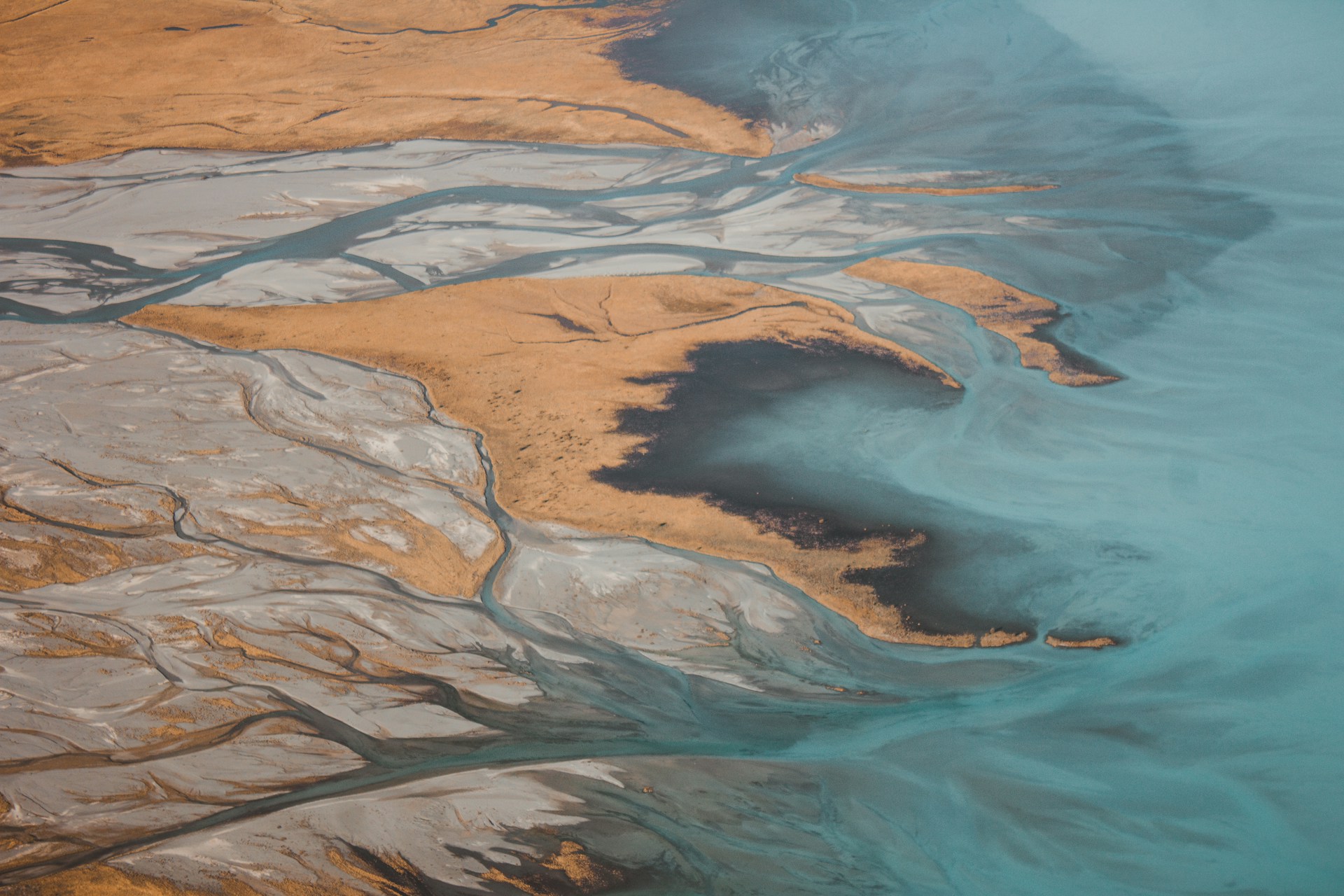
The Estuarine Mapping is yet another quite ingenious tool created by Dave Snowden. The estuarine metaphor is perfect: the place where a river meets the sea is shaped by many shifting conditions. It’s a unique ecotone – a transitional or liminal zone between river environments and marine ecosystems. Fresh water mixes with salt water, creating varying salinity levels and nutrient-rich flows that foster diverse and productive habitats.
Most importantly, tidal movements cause the water to flow in both directions at different times. Some things are possible at low tide that aren’t at high tide – and vice versa.
In an Estuarine Mapping workshop, we look at the preconditions for change. The method offers a natural sequence for developing workable strategies and next actions – at the right level of granularity, with the right attitude towards change, in the right kind of terrain and substrate.
Estuarine Mapping can be used for organisational challenges, team goals or personal projects.
The Estuarine Mapping workshop was developed as a counter to traditional, fixed strategies. It reflects key principles of change in complex environments. Instead of setting abstract goals, it emphasises understanding our current position and beginning with a clear sense of direction.
This approach involves:
- Mapping out constraints, actors, stake holders, condtions and constraints and sorting them depending on the time and effort required to change
- Start with a sense of direction
- Working with natural tendencies and managing them so that desired outcomes require less effort than undesired ones.
- Initiating and monitoring numerous small projects (micro-nudges) instead of one big project, viewing both success and failure as opportunities.
- Breaking down tasks to their smallest coherent components and creating novelty through new connections.
- Identifying what we can change, monitoring its impact, and deciding how to amplify or reduce these effects.
- Working to change not the conditions straight away, but how to change the SUBSTRATE so that conditons can change sustainably.
The workshop also embodies the principles of the Vector Theory of Change and aims to reduce conflict in decision-making within environments with diverse, strong viewpoints. Estuarine mapping explores the “thick” nature of the present, treating it not as a fleeting moment but as a state full of dispositions, connected to both the future and shaped by the past.

You must be logged in to post a comment.